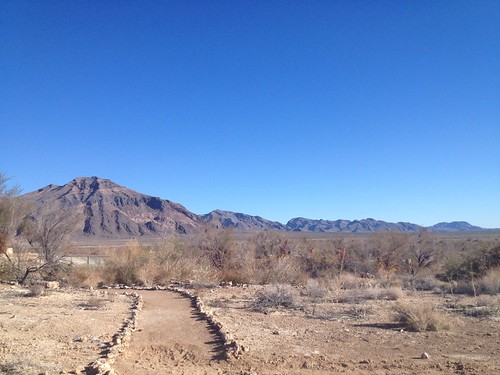
One of the best parts about visiting Las Vegas is having the chance to see firsthand some of the natural marvels of the southeastern United States. Last year we visited Death Valley, with its geographic superlatives (lowest, driest, hottest point in North America); this year we set our sights on Ash Meadow National Wildlife Refuge, a biological rockstar in a neighboring valley.
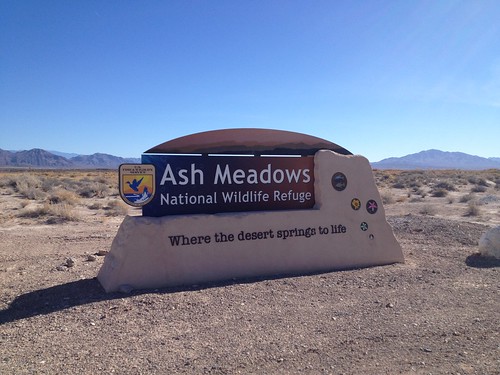
Biological rockstar? I admit I was skeptical at first, too. I mean, at first glance, the place appeared to be as desolate and barren as the rest of the terrain we'd passed on the two-hour drive from Las Vegas. But as improbable as it seemed, the place turned out to be teeming with crazy, unusual life. Starting out 10,000 years ago as a region of large lakes and rivers, this part of Nevada gradually dried out into the desert we know today. During that process, the creatures that lived in those lakes and rivers had to adapt to a new life in the harsh environtment of rock crevices and quick-drying streams. The result? Pretty cool:
Ash Meadows has the greatest concentration of endemic life [i.e., species that are found here and nowhere else on earth] in the United States and second greatest of all in North America. At least 26 endemic species have adapted to live in and around the waters of Ash Meadows. (From the U.S. Fish & Wildlife Service brochure)The most famous of these species are four varieties of pupfish that live in the handful of pools and springs that dot the valley. After a quick stop at the visitors' center to get a map and a friendly explanation, we set out to find these special fish.
CRYSTAL SPRINGS
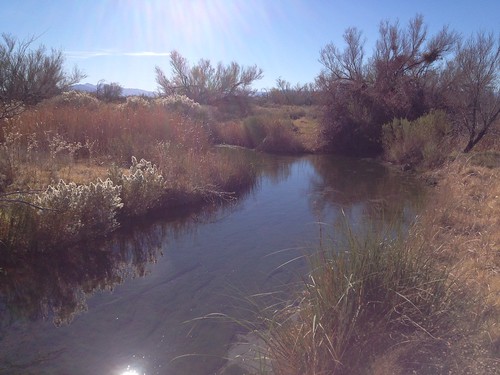
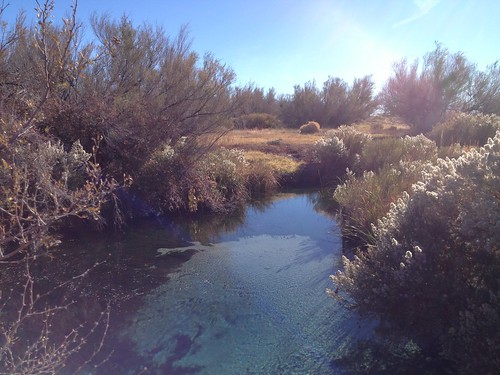
Crystal Springs was our first stop, and there we caught our first glimpse of Ash Meadows Amargosa pupfish. They swam in the shallows of the streambed, feeding on the dark-green algae. We could see them flashing green and blue from our perch on a stream-side boardwalk, but the distance was too great to get any clear photos. What you can gather from these photos is the lovely shock of stunning, crystal-clear springwater bubbling so refreshingly to the surface of an otherwise inhospitable land.

 |
| A mistletoe-like parasitic plant growing on a mesquite tree. |
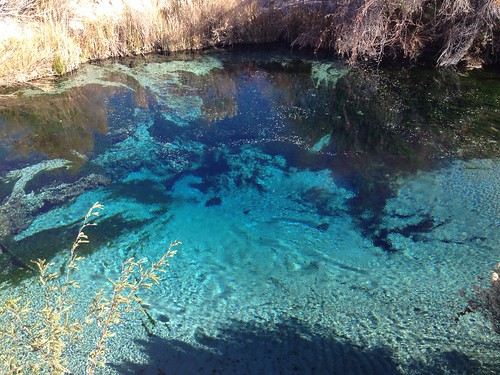 |
| The head of the spring -- crystal clear water welled up from below. |
DEVILS HOLE
Devils Hole is a tiny (smaller than my apartment) body of water that lies at the bottom of a deep crevasse and is the only place on earth where the Devils Hole pupfish lives. The fish are extremely endangered (there are only 90 of them left) and became famous in the 1970s when they were the subject of a Supreme Court decision (Cappaert v. United States) that prevented commercial development of the neighboring land in order to preserve sufficient water levels in Devils Hole to prevent the fish's extinction.
 |
| The place was cordoned off like Fort Knox, so here's a stock photo of the fish. |
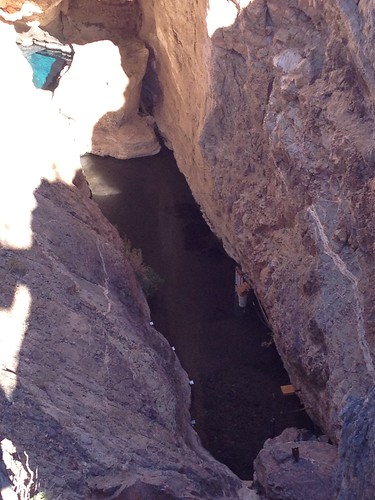
Also, in the "it's a small world" department, would you believe that an earthquake in Mexico could have dramatic effects on this pool? Turns out the answer is yes, and scientists just happened to be on-site to capture the tsunami event on video.
(Sadly, as cool as this is from a seismological perspective, the disruption caused by the waves is believed to have hurt the fishes' feeding and spawning -- their population is down from before.)
KING'S POOL AT POINT OF ROCKS
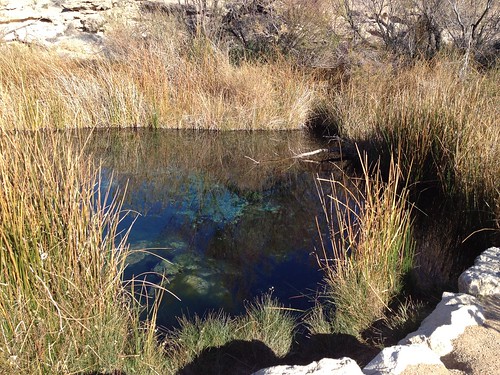
King's Pool is another spring not far from Devils Hole. The paths here allowed us to get right to the edge of the water, which permitted great viewing of the fish.
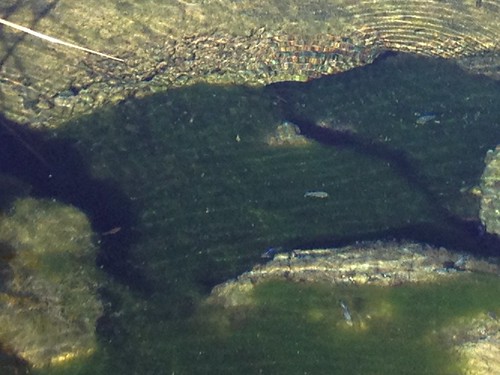 |
| There they are! The males are blue, the females green. |
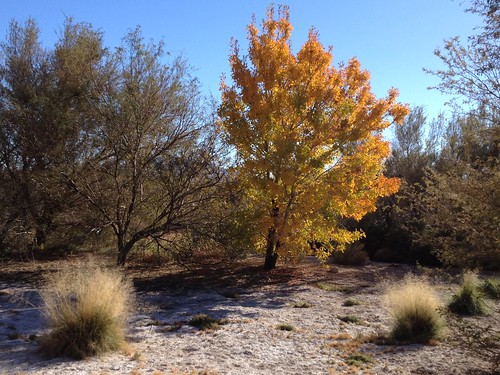 |
| An ash tree, for which the meadows are named. |
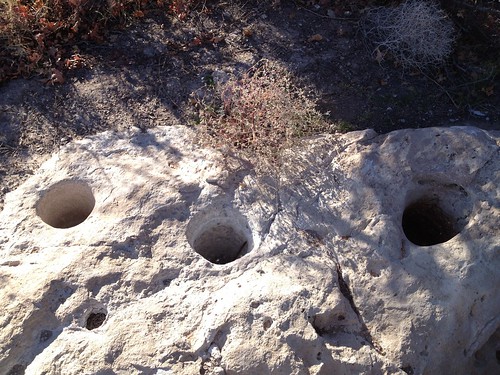 |
| In these holes Native American women ground the seeds of the screwbean mesquite tree into flour. |
CASA DON JUAN
In keeping with the day's southwestern theme, we went to Casa Don Juan's for a delicious dinner of authentic Mexican food.
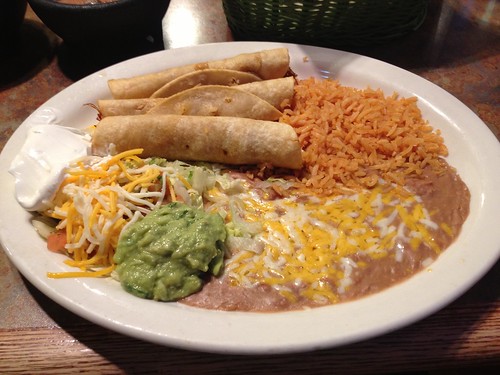 |
| Flautas de pollo con arroz, frijoles, guacamole y crema |