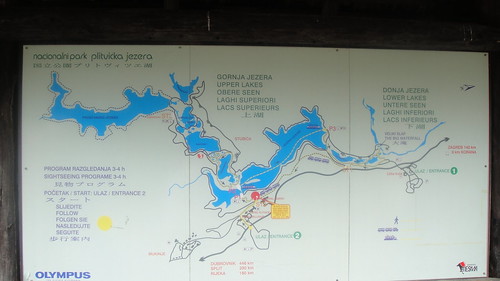
My last email got us to Croatia and my encounter with Croatian law enforcement and someone else's encounter with the grill of an oncoming truck. What I left out between those two episodes was a day of hiking in Croatia's Plitvice National Park.
Back when we were planning this trip, I had asked Quynh-Nhu and Nikolas what their vacation preferences were. Did they fancy cities, with their museums and arts? Were they more interested in the great outdoors? Or was this to be a hard-core beach vacation? The answer was yes. Meaning we'd hit the cities of Vienna and Budapest, and the beaches of Dubrovnik, with a good day of hiking in Croatia in the middle. This, of course, came as no surprise to me. Nikolas, being both German and an environmentalist, is all about Nature. And as far as Nature goes, the Plitvice Park seemed like a good destination.
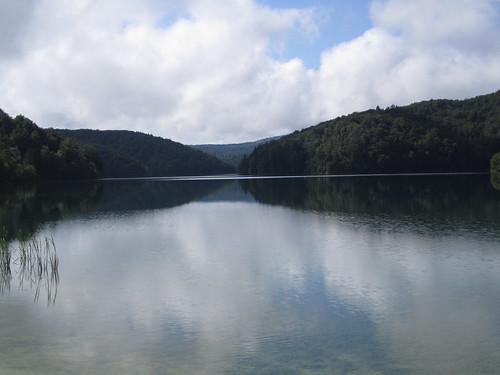
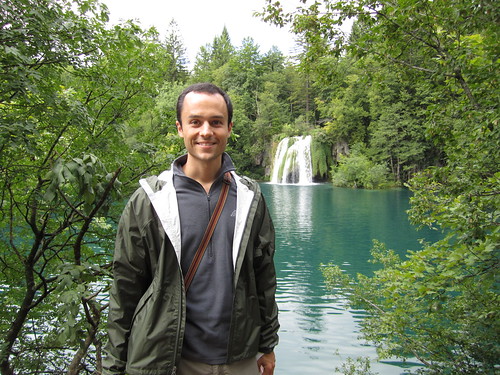
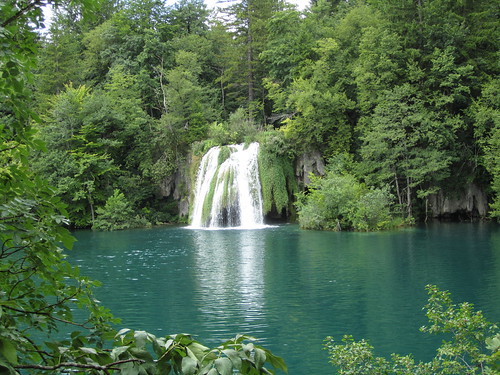
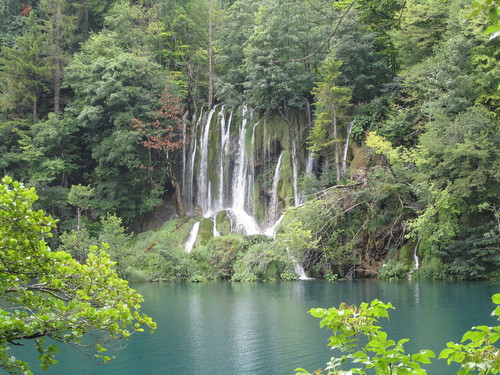
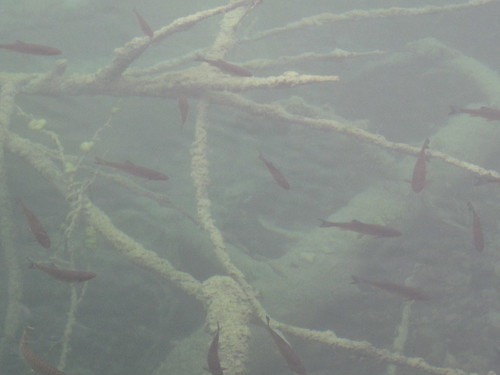
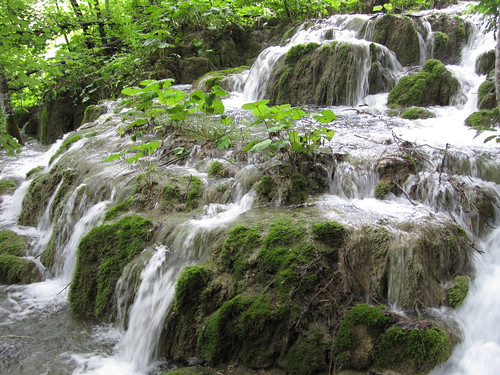
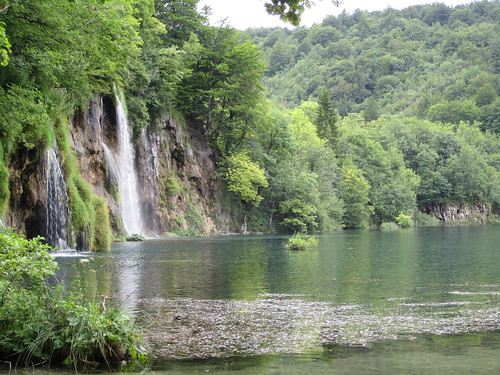
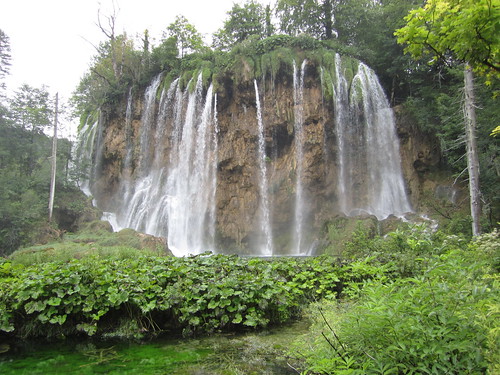
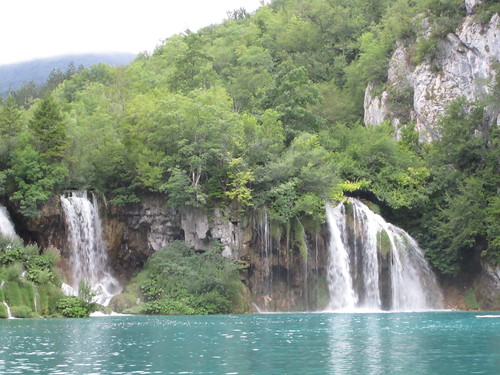
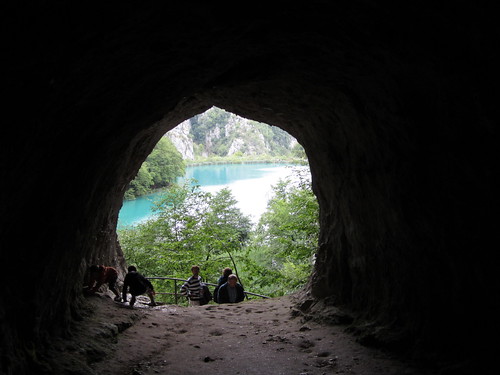
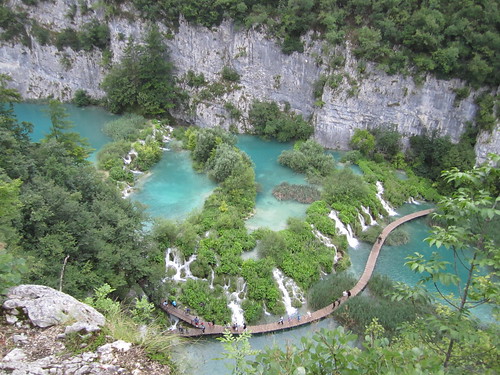
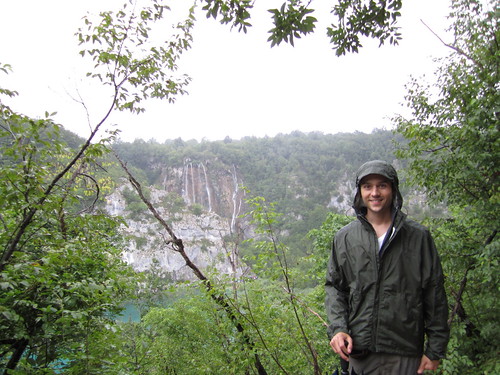
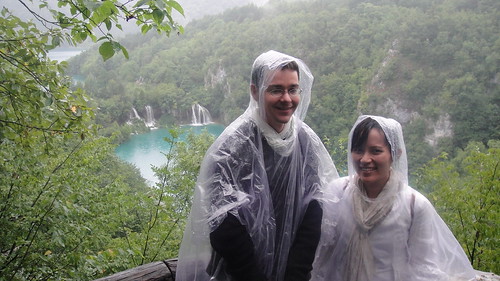
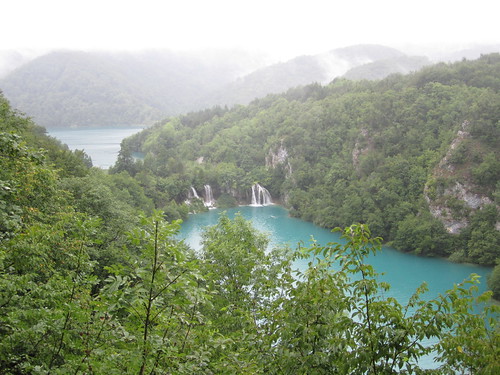
Plitvice is famous for its series of cascading, crystal clear lakes -- and rightly so: they're gorgeous! They're in a heavily wooded gorge, where the water is so heavy with minerals that, over time, the pools and cascades build up into barriers that make bigger pools and cascades. The end result is a terraced waterfall effect, with one lake spilling over a lip of stone into the next lake, some several meters down. The water is perfectly clear, which gives the lakes a bright blue hue, and enables one to see all of the plants and fish below. (Btw, Jordan, I got some polarized sunglasses for this trip, and it was amazing how much better I could see all the fish - it was like having x-ray vision!) In addition to the lakes, there were the surrounding cliffs and hills, as well as one giant cave, that you could climb up to get better views. It was lovely, and I think I took roughly 8 gazillion pictures (some of which I will post separately).
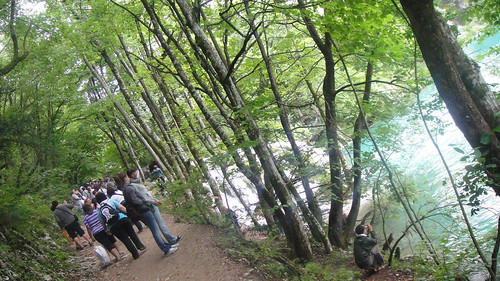
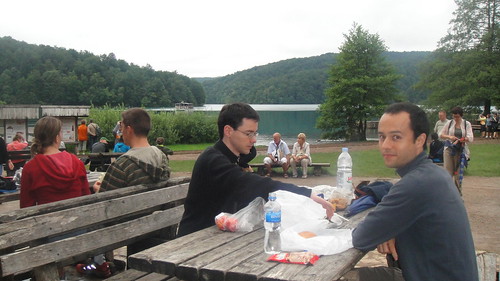
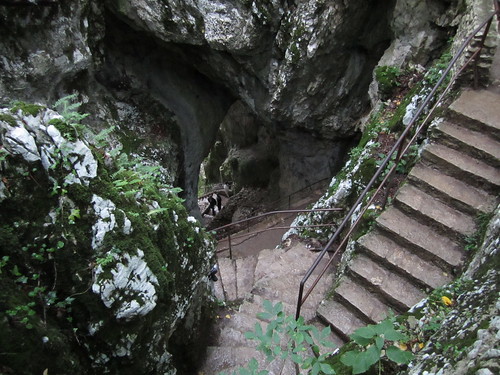
The problem for me, though, was that for as lovely as the area was, it was hard to take it seriously as "Nature" or as being, in any way a rough and rugged outdoor experience. I think I've told some of you how disappointed I've been by the hiking opportunities here on the East Coast as compared to the West -- about how I did an "eight-hour, highly difficult" hike in the Shenendoah in roughly 2.5 hours without breaking a sweat. Well, this national park made the Virginia parks look downright rugged in comparison. I mean, the paths were nicely paved (no mud here!), there were little shops selling sausages and beverages at various points along the way (why starve?), shuttlebusses could take you to roughly any point along the route (why hike?) and there were 17,000 tourists strolling about. Some of them clearly expected the experience to be an encounter with the elements (or maybe actually thought it was?) and were decked out in the European equivalent of the entire REI catalog. The rest looked like they could have been strolling downtown on a Sunday afternoon.
All of which brings me to an observation: Many people in Europe consider themselves to be very pro-nature and all things natural, and some of them have a tendency to look down their noses at us poor benighted Americans who don't have a clue. And yet so far in my European travels I have yet to see anything that resembles the vast, untouched expanses of nature that that exist in the United States. Could it be that we take our nature reserves for granted and don't appreciate them as much as the Europeans think they appreciate theirs? Maybe. What's rare (or nonexistent) is always more valued than what covers millions of square miles. But I think that many Americans really do value the national and state parks that we have, and as a policy matter, we've been protecting them for a long time. In a way, it's an example of how difficult it can be for some people, who have grown up in a country the size of one of our mid-range states and which has been densely populated for at least a thousand years, to understand the perspective of someone who's grown up in a country that, for the most part, is barely 200 years old, and which covers most of a continent.